What’s the best domain name to use for a landing page?

In the past few years there have been some misleading statements made regarding landing pages on subdomains, exact match or keyword stuffed domains and subdirectories. Firstly, we’ll decipher what each of these actually means.

Let’s say you own a biscuit company- ‘Cathy’s Cookies’ and your domain name is www.cathyscookies.com. You could then create another subdomain for this, specifically for Chocolate chip biscuits, www.chocolatechip.cathyscookies.com OR you could create a subdirectory, www.cathyscookies.com/chocolatechip. Maybe you think that you will try and gain more of a competitive advantage by creating another domain name altogether and you go and call it www.chocolatechipcookies.com. 

But which of these is actually going to help Cathy’s Cookies gain traffic and build authority? 

Well, this is where people have become confused. Some Google authorities have publicly stated that Google has become much better at identifying and associating subdomains with their other domains so having content on subdomains shouldn’t be an issue. While we can assume best efforts are made to do so by Google, there is astounding evidence to suggest that hosting on subdomains is not a good idea for a number of reasons.

We are often approached by clients who want to generate a number of pages on subdomains or new domain names to increase their presence which they believe will enhance their SEO. This is at no fault of the clients and, given the number of conflicting ideas and opinions online, can be a confusing topic even for those in the industry.

Our research finds that subdirectories are overwhelmingly more beneficial than subdomains and there are a number of reasons why.

While some people are under the impression that saturating the internet with numerous domains and subdomains will be beneficial to the SEO of their website, the contrary is actually correct.

Sometimes digital growth is strategically simple—we call it leverage. Let’s start talking.

SEO

When a new subdomain is created, the authority of that domain will be zero until enough traffic and interest is built for Google to decide it deserves any authority. Starting a new subdomain or a new domain means building authority from the ground up rather than inheriting authority from the parent domain, which is what happens to subdirectories. Particularly with landing pages where the subdomain appears as a single page website, authority will be difficult to build. The website will appear thin, lacking any genuine quality which will cause it to rank poorly.

In one of his Whiteboard Friday episodes, Rand Fishkin from Moz urged people to keep their content on one single subdomain to maximise their potential SEO benefit. He also made reference to a website who shifted their blog from a subdirectory to a subdomain and saw terrible results.

Let’s take a look at that particular website.

After months of research, iwantmyname.com decided they would shift their blog from a subdirectory (iwantmyname.com/blog) to a subdomain (blog.iwantmyname.com). They did all they were supposed to including page redirects for all URLS. While they expected an initial hit to their traffic followed by a gradual recovery, the traffic did not revert to normal after 6 months on the subdomain. It was at the 6 month point the team decided enough was enough and moved back to the subdirectory.


image1

Source: https://iwantmyname.com/blog/seo-penalties-of-moving-our-blog-to-a-subdomain 

Duplicate Content

If a landing page is being created for a PPC campaign, content may be taken from the products, services or about us pages of the website. One reason people often suggest subdomains rather than subdirectories is to avoid duplicate content sitting on their website. As Matt Cutts from Google Webmasters points out, 25-30% of the web is duplicate content, whether that be in the form of quotes, links or paragraphs taken from blogs and websites. He goes on to say that for the most part, duplicate content is not treated as spam unless it really IS spam.

Cutts says that while Google notices duplicate content, it is able to decipher which pages are doing it in an abusive or manipulative way. Websites that have some duplicate on 1 or 2 pages need not to worry.

Not convinced? If you’re landing pages are designed purely for PPC campaigns then they should ultimately be hidden using robots anyway. This will avoid any chance of search engines picking up duplicate content and means your adverts will rely solely on quality score.

Maintenance Cost

Each time a subdomain is created, that subdomain may be subject to hosting fees making it an expensive process. If you are wanting to create several different landing pages, the initial costs as well as maintenance and upkeep can become an unnecessary expense. 

But…… can’t I just host them all on the same server to reduce costs? Clever, but no. To get any SEO benefit, you will need to host on a completely different server.

Customer Confusion

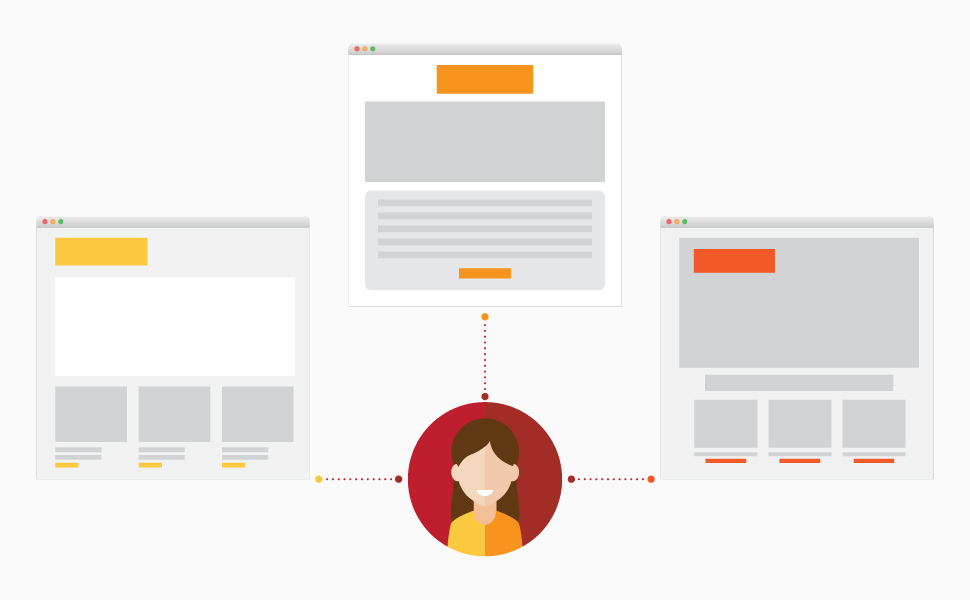
Let’s go back to our new business venture, Cathy’s Cookies. You’re going against all we’ve already discussed and you’ve decided to create some exact match or keyword stuffed domain names to try and reach a wider audience. To try and reach people searching for chocolate chip cookies you create www.chocolatechipcookies.com. To reach people wanting peanut butter cookies, you create www.peanutbuttercookies.com and to reach those who are after smarties cookies you go ahead and claim www.smartiescookies.com. As a wholesaler, your customers will generally look on your website, decide what they want and call you to make an enquiry.

If your customer is looking to add all three cookies to add to their cafe, they’re going to find it very strange if they end up calling the same number listed on three different websites. Not only will this confuse the customer, your business will look spammy and untrustworthy. 
CathysConnection

What to do then?

If you are wanting to run a PPC campaign and send customers to a particular page, you can create landing pages with subdirectories. The way we do this is by creating a new page within the subdomain and removing the navigation on the page, aside from a link back to the website.

By doing this, a much better user experience is offered, with the option for the user to explore more of the website.

Still unsure what to do?

We’re here to help! Get in touch and we can review your situation to advise the the best solution.

Interested in more?

Which social media platforms should my business be using?

Facebook, Instagram, Snapchat, Twitter, LinkedIn, Pinterest, Google Plus… The list goes on. Chances are, you’re already on at least one of these platforms. But is that enough? With social media audiences continuously growing, some businesses feel the need to cover all bases. To be on absolutely every inch of the internet. For some people, this might be necessary. But for most businesses, managing to stay relevant and up to date on every social media platform would be a real waste of time.

Ok, so I don’t need to be EVERYWHERE… But where SHOULD I be? The obvious answer, it depends. It depends on a number of things. What kind of business you are running, who your audience is, what your business objectives are.

Sometimes digital growth is strategically simple—we call it leverage. Let’s start talking.

Demographics

Each platform is more relevant to a particular audience than others. Snapchat, for example, is a much younger demographic with 60 per cent of users under the age of twenty-five and almost a quarter of all users are still high school students.

Facebook on the other hand, is used by pretty much everyone. 82 per cent of all 18-29 year old internet users use Facebook; 79 per cent of 30-49 year old internet users use Facebook; and 56 per cent of all internet users aged 65 years and over use Facebook. Looking at this data, no matter what your business offers, chances are, your audience is on Facebook.

The relevance of social media platforms goes further than just age demographics. Some platforms are widely used in certain countries and not at all in others. Most importantly, there needs to be reason behind why you are using certain social media platforms. Further than the reason of simply having a presence. Generally, most Australian businesses should have a Facebook page. A lot of people will search for businesses or recommend services to their friends through Facebook so having a presence there limits the barriers of customers finding your business. This also opens up the opportunity to use Facebook advertising. You can read more on that here.

What do you have to offer?

Take a look at your business and what you have to offer potential customers. If your business involves doing cool activities or fun events, you might have the chance to create some awesome video content. In which case, a snapchat account would be a great option- if you’re trying to appeal to a younger audience. Video content can then be repurposed for Youtube, Facebook and Instagram making the potential reach huge!

If you’re trying to sell products, Instagram is a powerful platform when posts are executed well. If you’ve worked on generating an engaged following, your potential to sell products is huge. Likewise, if you engage an influencer who is the right fit for your business, the returns you see could be massive. Depending on your product, Pinterest may be another option to promote your products. This is a great option for homewares and fashion with many Pinterest users purchasing products after initially seeing it on the social platform.

So, what should I use?

Look at what you’re offering and then see how a social platform could benefit your business. If creating an account on extra social platforms is not going to be beneficial, then don’t do it. It’s important to think outside the box as well. Just because other businesses in your industry aren’t doing something, doesn’t mean you shouldn’t be. There could be a huge opportunity that your competition hasn’t yet caught on to. Get creative, do a bit of research on each platform, and have fun with it!

Interested in more?

How To Market On Digital Platforms

With social media taking over the marketing space, gaining awareness, retaining attention, and converting people is a competitive space. So how does your business stand out and meet your goals through social media marketing?The key is having an effective digital marketing mix. Each platform is unique in its offering and its audience, requiring different marketing methods and tactics.

How To See Best Results With Google AdWords

Google AdWords is one of the most efficient ways of marketing. It gives you the opportunity to be exactly where your target audience is looking and stay at the top of their mind. AdWords campaigns can either use ‘search ads’, which are the ads you see at the top of the Google results page when you put in a search keyword or query or ‘display ads’, which are the ads you see on pages all over the internet. Both serve their own purpose and can be very effective when executed well.

To make money, you have to spend money. By following these tips, you can ensure you are being as cost effective as possible with your Google AdWords spend.

Sometimes digital growth is strategically simple—we call it leverage. Let’s start talking.

Keyword research

You may think you have a great idea but unless you do your research, there is no way to actually know. Keyword research is so important in adWords campaigns as it will ultimately build the basis of your campaign. Using the Google Keyword Tool, you can see the volume of search terms related to the service or product you are wanting to advertise. You need to analyse the keyword results and decide which keywords are worth bidding on. The idea is to find a happy medium- keywords that have a relatively high search volume with a low to medium competition. A keyword with a low search volume and high competition would be seen as more of a risk and you may not see the results you are after.

Highlight your USP

You need to remember that you’re not the only one paying for advertising space so trying to get someone to click your ad over someone else’s can be tricky. It’s important to highlight your Unique Selling Proposition. Why should someone click your ad instead of the next one? What can you offer that someone else won’t? Think about what your audience wants and communicate it in a way that is fast and easy to comprehend. Depending on your business, you may need to think about the language you are using and whether or not your audience will actually understand what it is you are trying to say.

Audience Research

Think about who you are trying to get to click on your ads. How do these people talk? What slang do they use? What images would capture their attention? You need to really understand your audience in order to create an effective campaign. Think about it. Would you talk to a 17 year old student the same way you would talk to a 34 year old mother? Probably not. This can go even further with geographical slang. Understand your audience and tailor your campaigns to suit these people. Specificity is key.

Good Copy

You need to be able to grab someone’s attention immediately. And you’re probably going to have a lot of competition while trying to do that. So you need to ensure your ad is giving people exactly what they need to read. Be quick and concise but give enough information that people actually know what you’re offering. With a limited word count, there is no time to muck around. Get straight to the point and create a strong CTA.  

Test

Particularly if you are starting a large campaign, it is always a good idea to test the waters before embarking on a massive spend. Choose one or two locations with the same audiences you are going to use for your main campaign and let it run for a couple of weeks. Watch these tests closely so you can see what is working and what is not. You might find that something you thought would bring a lot of sales is really underperforming. It’s much better to realise this in your test campaign than to waste large sums of money wishing you’d done a test! Whether your test proves to be a success or failure, you’ll definitely gain some knowledge to use for your main campaign.

Now you’ve got some insight into what it takes to produce a successful Google adWords campaign, it’s time to get started. If you need any help with getting one started, let us know. We’d be happy help.

Interested in more?

How To Market On Digital Platforms

With social media taking over the marketing space, gaining awareness, retaining attention, and converting people is a competitive space. So how does your business stand out and meet your goals through social media marketing?The key is having an effective digital marketing mix. Each platform is unique in its offering and its audience, requiring different marketing methods and tactics.

10 Reasons Why You Should Be Using Facebook Advertising

Sometimes digital growth is strategically simple—we call it leverage. Let’s start talking.

1. Specificity: The ability to target a very direct audience is made incredibly easy on Facebook. From demographics to specific interests and retargeting, Facebook advertising gives you the opportunity to put your ads exactly where you want them. You can even choose what time of day you want your ads displayed and your placement preferences.

2. Reach: Because of Facebook’s great targeting tools, you can reach a really engaged audience. If you know exactly who you want your target audience to be, you can focus on only reaching those people meaning your budget is spent efficiently and you are more likely to achieve better results.

3. Value for money: You can create a campaign using as little or as large a budget as you like. A little tends to go a long way with Facebook advertising. If you are wanting to increase engagement and awareness after only ever using Facebook organically, you can make do with a very small budget. On the other hand, if you have a large budget to work with, the results can be phenomenal with a well executed Facebook campaign.

4. Immediacy: You can go from idea to results in a matter of minutes if you really wanted to. You can come up with an idea for a facebook campaign and immediately start implementing it. The larger the campaign, the longer it will take but in comparison to other forms of advertising, the setup and implementation is super speedy.

5. Direction: choose exactly where you want your customers to go. Unlike print, tv or radio advertising, social media advertising gives you the opportunity to point customers to a direct location. Whether you want to share information about a new venture in your business or you want to direct traffic straight to your enquiries page, anything is possible.

6. Build engagement: With Facebook algorithms, it is becoming increasingly difficult to reach your audience organically. By reaching new audiences with social media advertising, you are likely to drive engagement from an increase in page likes and post engagement. This increase in activity and engagement may make your page seem more worthy and may increase your likelihood of reaching more people.

7. Measurable: Particularly when linked to your analytics account, the data you can gain from Facebook advertising is extremely insightful. This means you are able to see exactly what is working and what is not. All of the data you gain from one campaign can then be used in the creation of your next campaigns.

8. Real-time: You see your results as they are happening which means you can adjust your campaign whenever you like, based on success or failures you have noticed. No other form of advertising allows you this flexibility. Generally, you would create a campaign and hope for the best. This way, if something isn’t performing as you expected, you can turn the ads off completely, adjust the budget or adjust the ads.

9. Awareness: Even if your campaign is a bit of a flop, your ads will generate awareness and your business will be more easily recognised because of it. Word-of-mouth can generate a lot of leads so being in front of your target audience is really important. Facebook ads can be a great start to generate awareness of a new or growing business. It creates another touch point for your audience and using Facebook advertising puts you in a better position to generate a sale or lead.

10. Drive offline sales: By generating awareness and spreading word-of-mouth, sales and leads may occur offline as well. It is a good idea to measure your sales, leads and enquiries from an overall perspective to ensure you can see how the campaign is generating awareness by on and offline. Of course some of your new sales or leads won’t all be coming from your Facebook campaign but it is good to see how your business is improving.

Are you ready to get started on a Facebook advertising campaign? Get in touch with us today and we can create something awesome.


Interested in more?

How To Market On Digital Platforms

With social media taking over the marketing space, gaining awareness, retaining attention, and converting people is a competitive space. So how does your business stand out and meet your goals through social media marketing?The key is having an effective digital marketing mix. Each platform is unique in its offering and its audience, requiring different marketing methods and tactics.

Retargeting Ads: Do they work?

Have you ever felt like you were being tormented by that item of clothing you left in your online shopping basket? Like every online corner you turn it’s stylin’ self is staring at you, trying to lure you back to that ‘Purchase’ button. This isn’t happening by coincidence, in fact businesses are doing this very purposefully to entice you back to their website.

Sometimes digital growth is strategically simple—we call it leverage. Let’s start talking.

How does it work? Am I being stalked?

In a non-creepy way, sort of. I’ll break down what we do exactly.

Firstly, we put a bit of code on the business’s website and any specific pages they would like to track. In Facebook or Google AdWords, we can then use this tracked audience that is being built as a target audience for ads. When it comes to setting up the ads, you can target people who viewed specific pages or people who just viewed the website. You can even target people who made it to the ‘add to cart’ but didn’t actually checkout. Ultimately, it’s like an online shop assistant following you around the store after you’ve picked up or tried on an item.

Does it work? 

Studies have shown that returning visitors to a website are much more likely to purchase than a new visitor. A 2016 study by BI Intelligence found that on average, new visitors to a website had a 2.4% conversion rate compared to returning visitors who had a 4.5% conversion rate. So if you’re putting your product in front of people who have visited your website and specifically viewed that product, the chances of them purchasing are much higher than if you didn’t.

From our own experience working with a range of businesses, we find retargeting ads receive a much higher ROI than regular ads. This is true for Google AdWords, Facebook and Instagram advertising. They work because you’re speaking to an already engaged audience who you know is interested in what you have to offer. Data from your website and Google Analytics as well as understanding your typical customers allows you to be pretty specific when creating regular ads but retargeting takes that specificity even further.

Being able to stay at the top of a customer’s mind is essential. Every platform of social media brings another opportunity to promote your business, product or service This means that your competitors have these same opportunities so if you’re not grabbing their attention, someone else probably is. Take the chance to target those who are interested in your business and receive a good ROI.

If this sounds like something you want to get started for your business, chat to us about what you want to achieve and we can put a strategy together for you. Get in touch with us here

Interested in more?

How To Market On Digital Platforms

With social media taking over the marketing space, gaining awareness, retaining attention, and converting people is a competitive space. So how does your business stand out and meet your goals through social media marketing?The key is having an effective digital marketing mix. Each platform is unique in its offering and its audience, requiring different marketing methods and tactics.

Simple ways to boost your eCommerce store

Undoubtedly, spending lots of money on digital advertising will probably lead to you gaining a strong flow of traffic to your website. You can create great eye-catching, witty ads that will draw in customers and enhance your page views. Your paid traffic analytics will look awesome, however you may not be making the sales you thought you would.

When we look at our analytics and see that the number of visitors and pageviews has increased, it can be easy to think that the website is performing well. But, the main issue with this, particularly on an eCommerce site, is that conversions need to be the main goal. You can have all the visitors in the world looking around your website, but if they’re not buying anything, there is not a lot to be gained.

Don’t get me wrong, digital advertising and social media advertising is a great way to boost traffic and is almost a necessity for some businesses. But making sure the content you are sending traffic too is up to standard, is just as important. We’ll look at advertising later on in the post, but firstly, here are a few simple ways to get your store’s content up to scratch.

Sometimes digital growth is strategically simple—we call it leverage. Let’s start talking.

1. Good quality images

Taking good quality, clear images with a decent camera is one of the most important points. No one is going to want to buy something that doesn’t even look good on the website. Make sure there are images of the product from different angles to show details properly. If the product is clothing, show images of it being worn. This diminishes buyers anxiety by showing off the product as much as possible.

2. In-depth descriptions

Product descriptions should be written to sell to the target audience. It should use personable language where appropriate and make the product sound like it’s worth buying. Give a detailed description so the buyer knows exactly what the product is, what it does, how it fits, what fabrics/materials/ingredients are used.

3. Implement reviews

In 2014, Bright Local conducted a study that found 88% of people surveyed trust online reviews as much as a personal recommendation. The same study found that 72% of customers would trust a business more after reading a positive review. These stats show that people are more likely to purchase from your store after reading that someone else has enjoyed the product already. To influence customers to write a review, send out an email or have a prize or voucher each month for the most helpful review submitted.

When you’re happy with the content on your website, you can start to implement advertising. Make sure your target audience is specifically defined to avoid wasting budget on an audience that is not going to be interested in your products. You may have a few target audiences, so create segments and build campaigns accordingly.

Read our previous post on ‘5 Tips for your best digital advertising results’ for more insight into creating successful campaigns.

As Shopify partners, we know a thing or two about eCommerce stores. If you want to chat anything eCommerce, or just want to chat, get in touch with us. 

Interested in more?